The late years
A considered guide to an old dog's comfort.
Mobility, rest and calmer nights for dogs who have slowed down. Every recommendation is chosen on the specifications that decide whether it actually gets used, for people who would rather buy once and buy well.
- Compared on published specifications
- No paid placements
- Medical questions go to your vet
Where comfort starts
Four things, in this order
- 01
Footing
Hard floors are where most old dogs first struggle. Runners on the routes they use, short nails and trimmed pads prevent more falls than any single purchase.
Slipping on hard floors → - 02
Getting up and in
A ramp is a right triangle, so its length decides the incline. Too short and a dog won't use it. Multiply the height by 2.9.
Ramps for cars and sofas → - 03
Rest
An aging dog needs a bed firm enough to push up from, not one to sink into. Deep and plush makes standing up, the hardest part of the day, harder still.
Getting onto your bed → - 04
Nights
Pacing and restlessness after dark often start with discomfort rather than worry. It helps to know which you're looking at.
Anxiety in older dogs →
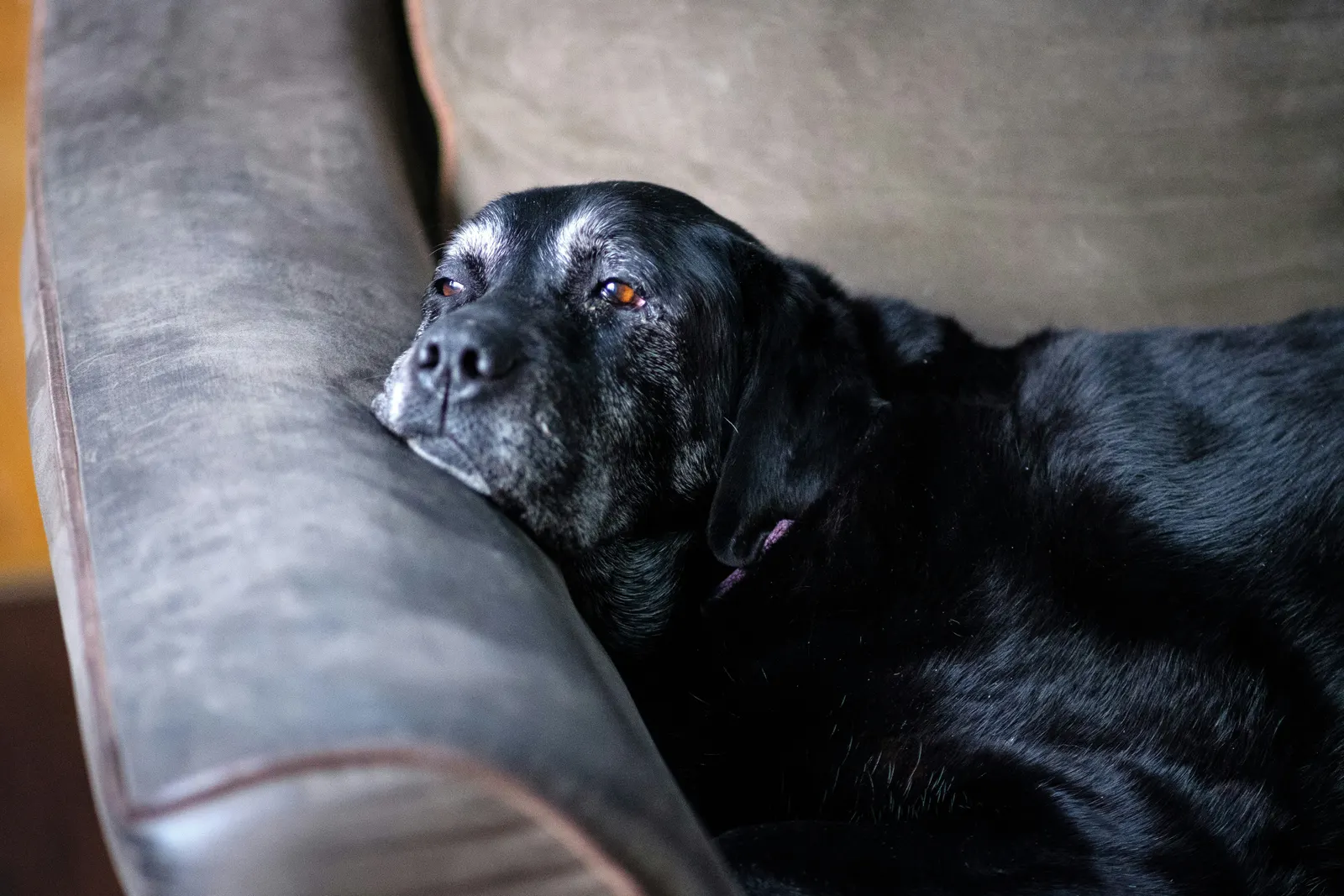
At this age, comfort is mostly small things done well.
From the guide
Start here
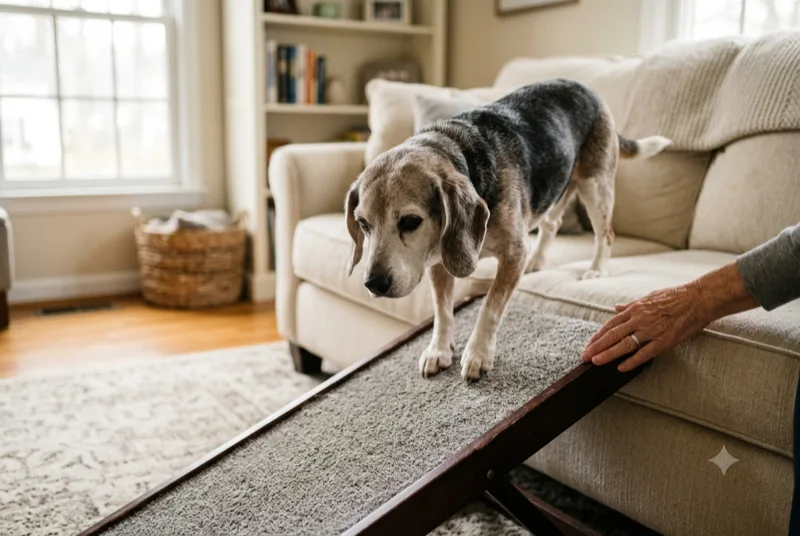 Mobility
 Dog ramps for senior dogs
Most ramps sold are too short to hold a comfortable incline. The length table for cars, trucks and sofas, then the ramps that meet it.
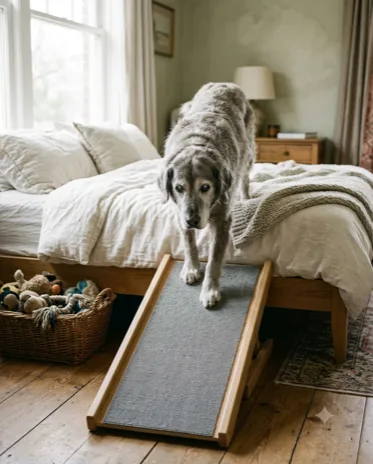 Rest
Rest Dog ramps for beds
A bed with a box spring is a 25-inch climb and needs about 73 inches of ramp, far longer than most sold for the job.
 Nights
 Anxiety in older dogs
Why a dog who was always calm can grow unsettled late in life, and how to tell worry from pain.
How we choose
Fewer things, chosen carefully
The specification that matters
Incline for a ramp, girth for a harness, foam density for a bed. We read what manufacturers publish against what an older dog needs, and name our sources.
A short list on purpose
Three products that meet the standard beat ten that mostly don't. When a list is short, we say why.
What belongs with your vet
Comfort, mobility and the home are ours to help with. Diagnosis, medication and dosing belong with your vet, and we'll tell you which one you're looking at.